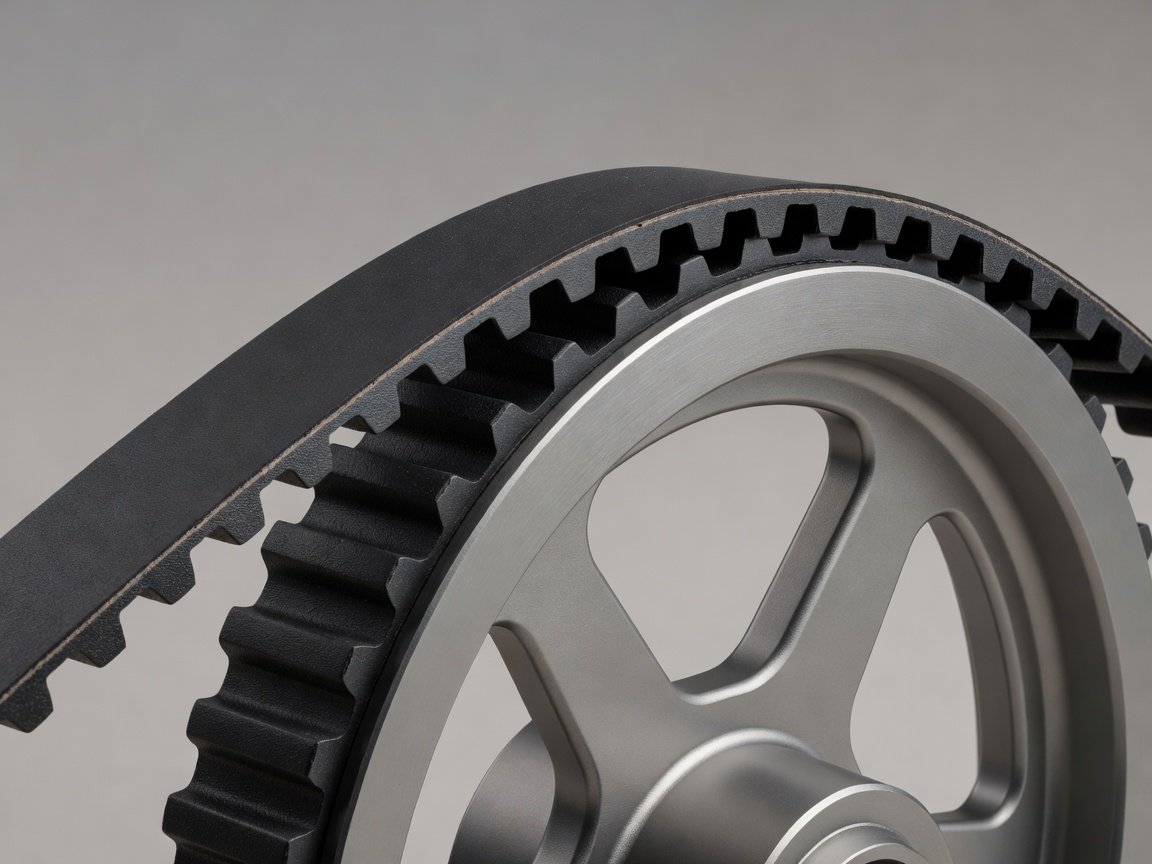
 Belt
Belt drive
Look for a wide flat belt with internal teeth and a pulley instead of a sprocket.
Drive guide · Chain, belt & shaft
The engine makes power; the final drive delivers it to the rear tyre. Recognise which system your bike uses and where each part sits before considering any adjustment.
Power starts at the crankshaft and passes through the clutch — a pack of friction and steel plates usually behind a round cover on the right side of the engine — then into the gearbox. It exits on the left side of most bikes through the output shaft, where the front sprocket sits behind a small plastic or alloy cover.
Everything after this point is the final drive. Its job is simple: carry torque to the rear wheel at a ratio set by the number of teeth on each sprocket or pulley.
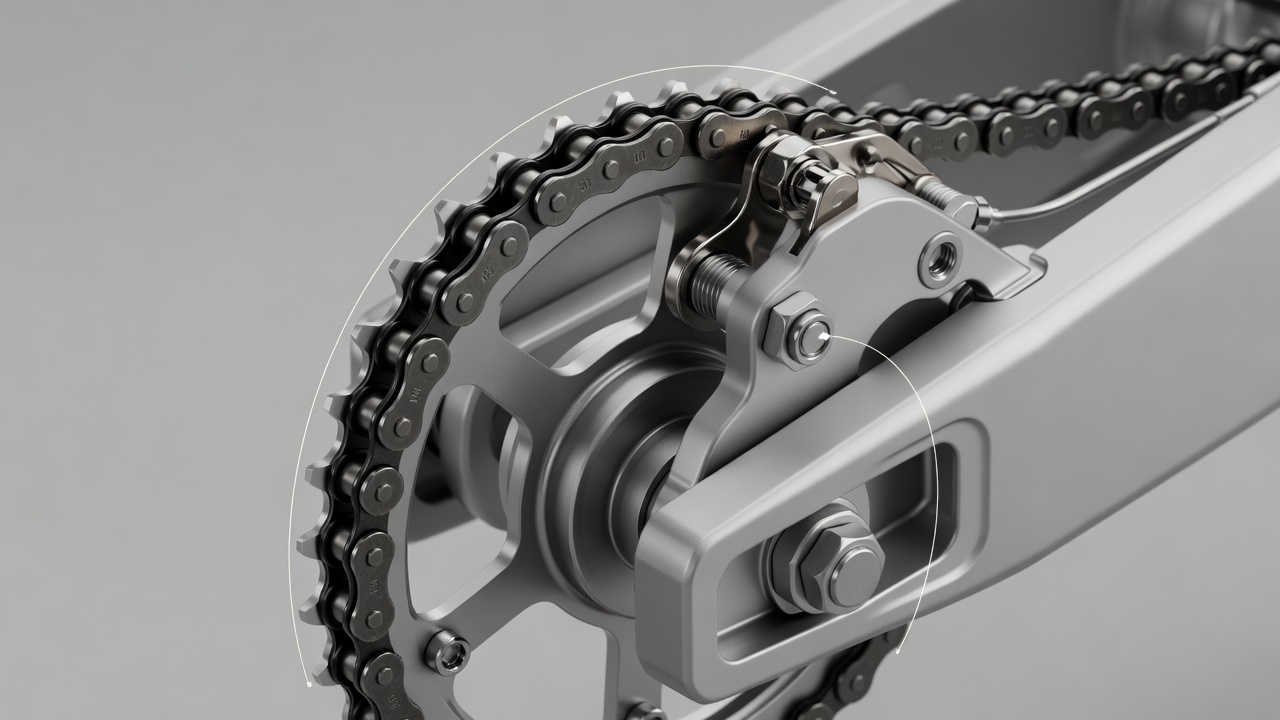
Location: the left side of the bike, running along the swingarm. Shape: a loop of linked rollers wrapped around a small front sprocket and a large rear sprocket bolted to the wheel hub. A plastic chain guard and a slider on the swingarm protect it.
Chains carry a size code stamped on the side plates. Common road sizes are 520, 525 and 530: the "5" means a 5/8-inch pitch (the distance between pins), and the last digits relate to roller width. Most modern road chains are O-ring or X-ring types, with small rubber seals between the plates that hold grease inside the rollers. Brands such as DID, RK, Regina and EK print the type on the plates.
A chain is joined by a master link: either a clip-type link (a spring clip visible on one side) or a rivet-type link pressed with a special tool. The rear axle sits in chain adjusters — marked blocks or snail cams at the end of the swingarm that set tension and keep the wheel aligned.
 1234
Safety note: Check slack only with the engine off, ignition off and the bike in neutral. Never turn the wheel by hand while the engine runs. A chain that is too tight can damage bearings; one that is too loose can jump the sprocket. The correct slack figure is model-specific and usually printed on a swingarm sticker or in the owner's manual.
A belt drive uses a toothed reinforced rubber belt over two pulleys. It is quiet and needs no lubrication, which is why Harley-Davidson uses it widely and BMW fitted it to models such as the F800ST. Inspect it for cracks, missing teeth and stones caught in the pulley, following the manufacturer's tension spec.
A shaft drive encloses a rotating shaft inside the swingarm with a bevel gear housing at the rear wheel. You will find it on BMW boxer twins, Moto Guzzi models and tourers such as the Yamaha FJR1300. It has a final drive oil that is changed at manufacturer intervals.
BeltLook for a wide flat belt with internal teeth and a pulley instead of a sprocket.
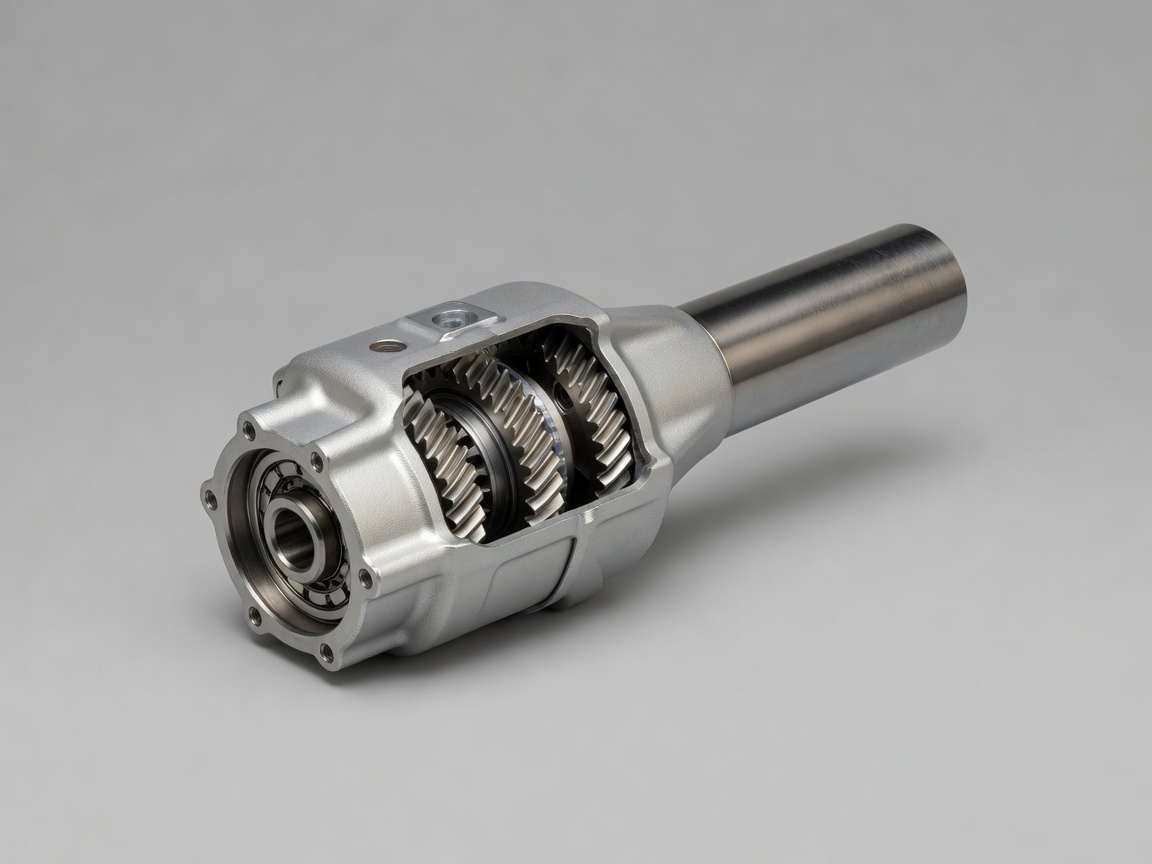 Shaft
An enclosed swingarm and a rounded gear housing at the hub signal shaft drive.
| Component | Normal function | Symptom to report |
|---|---|---|
| Chain | Even slack around the wheel, quiet running | Tight spots, kinked links, rust, dry rollers |
| Sprockets | Symmetrical teeth | Hooked or shark-fin teeth |
| Adjusters | Equal marks on both sides | Uneven marks, wheel misalignment |
| Belt | Smooth surface, full teeth | Cracks, fraying, missing teeth |
| Shaft drive | Dry housing, smooth take-up | Oil weeping, clunks when changing throttle |
Chains and sprockets are usually replaced as a set. Choosing sizes, tooth counts and master link types requires your model's specification, not a visual match.
Next: identify fuel delivery and heat control →We use cookies Essential cookies keep this site working. Optional ones help us see what is useful. You can change your choice at any time. More about cookies